


When choosing RAM, it can be hard to decide when comparing CAS latency 16 vs. 18. Gaming enthusiasts often prefer more RAM to enhance the performance of their computers. Determining what RAM to pick is essential, as slower RAM can be problematic. While choosing the RAM, CL or CAS is also crucial. However, some people are unsure whether to prefer CL 16 or CL18 RAM. So, which one to choose?
It is better to use CL16 than CL18 since its CAS latency is lower, meaning the CPU processes data more quickly and delivers more data in fewer cycles. Gamers will get a better response time with CL16 RAM than with CL18 RAM since CL16 RAM processes data in 16 cycles, whereas CL18 RAM takes 18 cycles.
What is CL?
CL indicates the CAS latency, measuring how quickly RAM processes and prepares data to respond to CPU instructions. The RAM records a clock cycle time delay each time it accesses a memory column.
When it comes to asynchronous DRAM, the measurement of time is the nanosecond. As for synchronous DRAM, the measurement is in the clock cycle while the RAM uses CL or CAS latency.

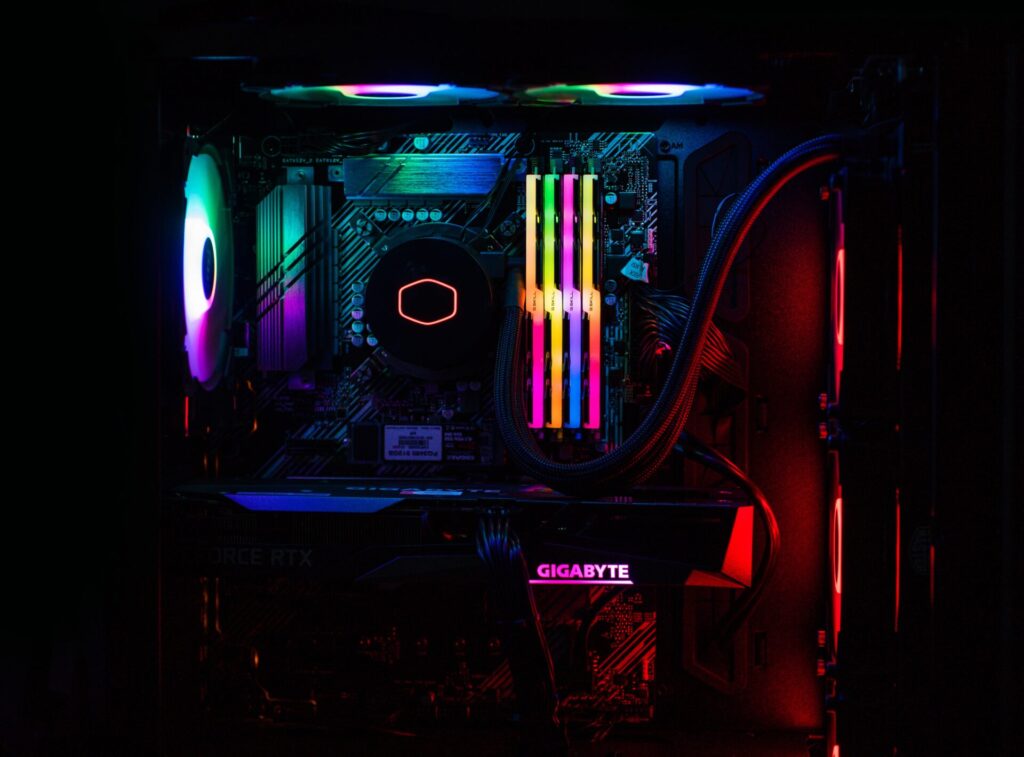
There are several ways of describing CAS latency. For example, CL 16 RAM kits would have CAS 16 latency. Lower CAS latency is always a sign of faster performance, regardless of memory speed.
So, when searching for high-speed RAM, ensure it has a low CL. Most people mistake data transfer rates with CAS timings.
There’s a difference between these two for RAMs, however. In many cases, the CAS timings of two RAM kits with the same transmission rate can differ, which is not the case with data transfer rates.
CAS Latency 16 Vs. 18 – Head-to-Head Comparison
Here is a detailed comparison of CAS Latency 16 and 18.
Speed
People tend to think that RAM speed depends only on its clock speed; however, RAM speed depends on various factors. The data transmission rate is one way to determine RAM speed.
It is the maximum amount of data a RAM can send or receive from the CPU. However, to accurately measure the speed of your RAM, you need to look at its CL and clock speed simultaneously.
As RAM speeds change, so does the CL range. In memory, MHz is the unit of measurement which indicates how often RAM can access its memory.
Your RAM stick or manufacturer’s website will tell you the CL latency your RAM has. The RAM stick typically displays three or four digits, and the first one represents CL.
For 3200 MHz RAM, CL values typically range from 14-16, while 3600 MHz RAM typically has CL values between 15-19. As compared to the former, the latter has a smaller reach.
CL16 RAM offers faster response times than CL18 RAM, as CL16 RAM takes 16 cycles to process data, as opposed to CL18 RAM, taking 18 cycles.
As a result, despite having a faster memory speed, a CL14 3200MHz RAM performs better than a CL18 3600MHz RAM. Thus, it will be best to try minimizing your computer’s CL to get the best performance.


RAM Latency
CAS latency is an essential factor in determining a RAM’s speed. Total RAM latency will depend on the CL and other variables. Depending on the RAM speed, the RAM latency measures how long it takes for a clock cycle to complete.
As a result of higher RAM speeds, RAM latency will reduce, resulting in increased performance. If the memory speed is similar, a CL16 will operate much faster than a CL18.
Latency is similar between CL16 and CL18, but CL18 is a bit slower. Therefore, a CL16 RAM might be able to process data more quickly than a CL18 RAM due to its shorter cycle time.
Conclusion
The CL16 and CL18 offer higher memory speed, enabling them to operate at their best. The main differences are in seamless gaming and the installation of the kit on the system. Despite the actual memory speed, a CL16 will outperform a CL18 in nearly all criteria.
It is only possible for a CL18 to perform better than a CL16 if it runs on an Intel processor, but you’ll need more RAM to achieve the same performance as a CL16. While both of these kits have slightly different activities, neither will let you down.